
What is the first purée you give a baby? You’ve probably already been to see your pediatrician and had it explained in detail. They may even have handed you a pile of papers with instructions.
Even so, we moms and dads often end up with a lot of doubts and questions about exactly how to get started. That’s why we want to show you the six most common first purée and porridge recipes for your baby.
- First vegetable purées
- First fruit purées
- First cereal porridges
- The order doesn’t matter
- How to introduce foods
First vegetable purées
If you decide to start with vegetables, the most common choices are potato, carrot, zucchini, pumpkin and sweet potato, since they have a mild flavor and are easy to digest. Here are two very simple recipes that your baby will love:

Easy carrot purée
Carrot is one of the first foods added to the diet when complementary feeding begins. Its sweet flavor and the bright orange color it gives make this one of every baby’s favorite purées.

First potato purée
This is one of the easiest purées you can make for your baby. Potato is mild and nutritious, rich in starches, vitamins, minerals and carbohydrates. Thanks to its gentle flavor and smooth texture, most babies like it.
First fruit purées
If you’re going to start complementary feeding with fruit, you should know that many moms turn to apple, pear and banana. They’re affordable, easy to prepare, available all year round, and their sweet flavor is usually a hit with babies.

Apple purée
Apple is one of the first fruits we cook into a compote for our babies. It’s a very sweet fruit, full of vitamins and rich in fiber, which makes it an excellent ally for starting complementary feeding.

Banana purée
Banana is a natural source of energy, rich in potassium and vitamin B6, ideal for keeping little ones full of vitality. Its sweet flavor and soft texture also make it one of every child’s favorite fruits.
First cereal porridges
The most traditional option when starting complementary feeding is usually cereals. In this case, choose easy-to-digest cereals like rice, oats and corn.

Rice cereal
This is one of the first porridges babies usually eat. Rice cereal is one of the recommended options for babies starting complementary feeding, since it’s easy to digest and has a mild flavor.

Oatmeal for babies
This cereal is rich in protein and fiber and is an excellent source of manganese and phosphorus.
The order doesn’t matter
The WHO says that fruits, cereals or vegetables can be introduced in any order. And the American Academy of Pediatrics advises “Your baby’s first foods are your choice.”
Simply offer your baby new foods one at a time, leaving several days between them so you can spot any allergies. And don’t forget that milk, whether breast milk or formula, will remain their main source of nutrition until they turn one.
How to introduce foods
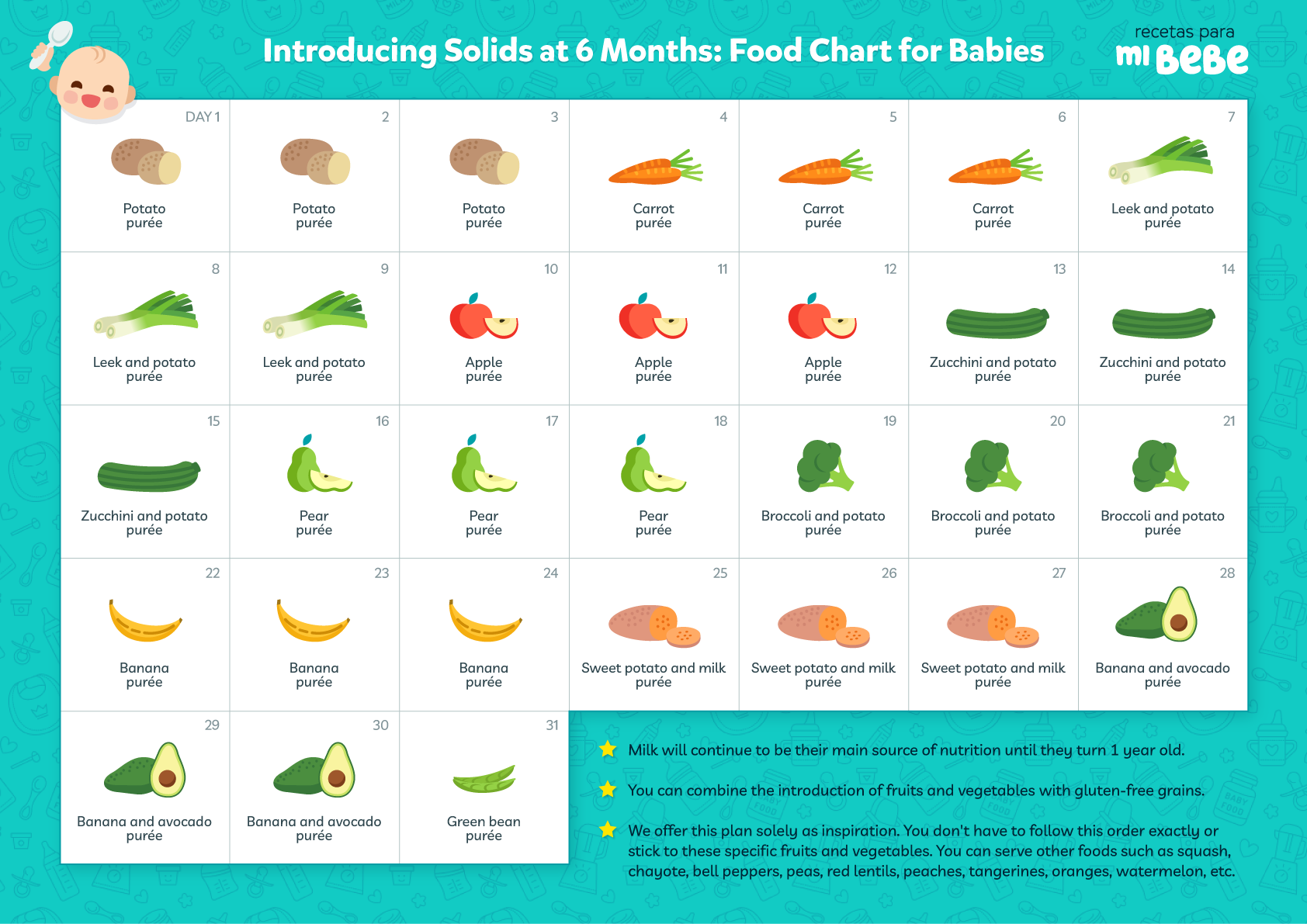
Pediatricians usually recommend starting with any of these three options: cereals, fruits and vegetables. Wait 2 to 3 days before offering a new food to spot possible allergies.
For more details, see our chart and tips for introducing foods at 6 months.